Team

Held by those who were initiated first.

The ceremony is led by Gabonese elders of the Bwiti tradition, supported by initiated assistants, live musicians, and a Brazilian host team that carries everything outside the temple.

The tradition travels with the people, not the plant.

Iboga can be shipped. Bwiti cannot. What makes a ceremony a Bwiti ceremony is the presence of people who were initiated into it themselves, in Gabon, by elders who were initiated before them — and who carry the songs, the sequence, and the judgement that the sequence requires.

That is the reason this retreat exists in the form it does. The elders travel from Gabon to hold the ceremonies. They are not consultants advising a Western programme; they are the people whose tradition this is, running it the way it is run at home.

We are guests of a living practice. The role of everyone on the Brazilian side is to build the conditions in which that practice can be carried out properly, and then to stay out of its way.

The people who hold the 2027 retreats.

Two Gabonese elders lead the ceremonies. Charles and Tatiana carry integration support and are themselves in training in the tradition.

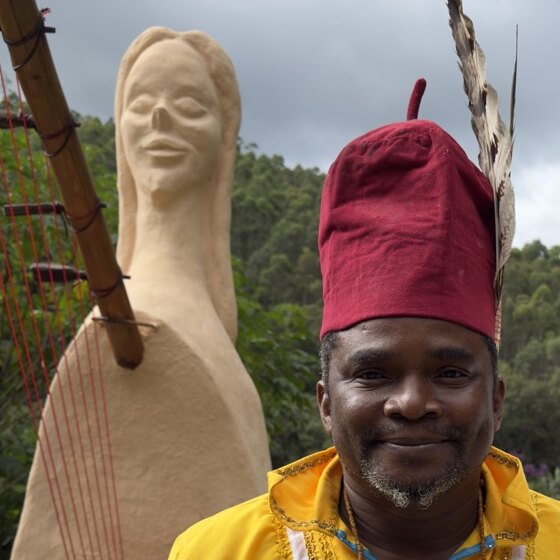
Popo (Landri Ekomie-Obame) in yellow ceremonial dress and a red cap with a feather, beside a tall carved harp sculpture Gabonese Elder · Bwiti Priest

Popo — Landri Ekomie-Obame

Born in Cocobeach, Gabon, and raised within a Bwiti Fang lineage, Popo was initiated by his mother, a renowned Nganga of iboga in Cocobeach. He is both a practising Bwiti priest and a scholar, with a doctorate in ethnology from the University of Paris V – René Descartes.

He has written extensively on Bwiti philosophy, healing ritual, and the role of iboga, including Qu'est-ce que le Bwiti? (2014) and Le Bwiti: rite initiatique et thérapeutique africain (2023), and co-authored a study of iboga use in Brazil.

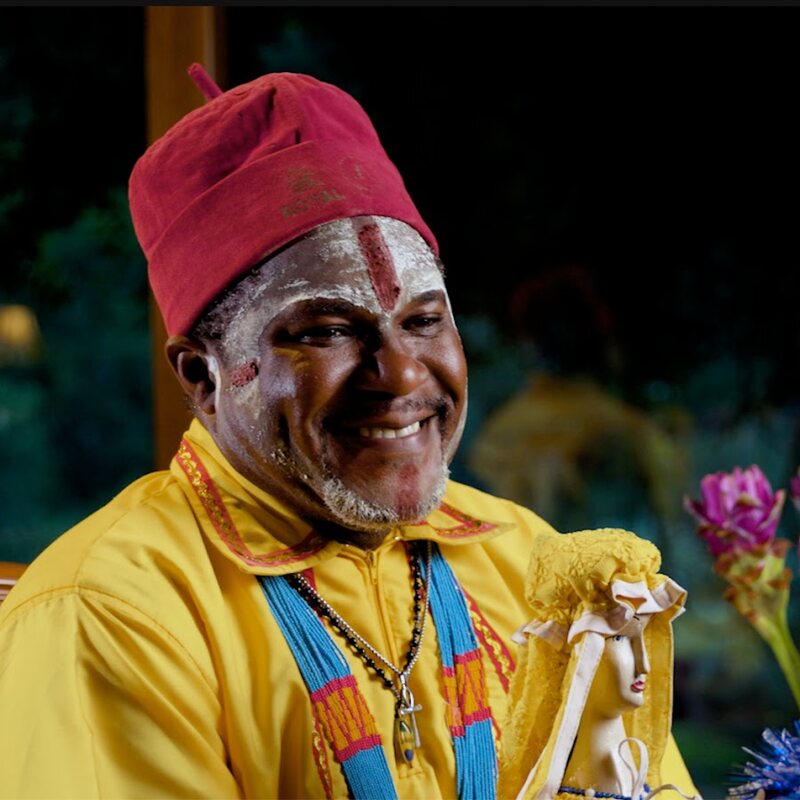
Cedric Akuma smiling, in yellow ceremonial dress with a red cap and white face paint Gabonese Elder · Bwiti Master · Master Harpist

Cedric Akuma

Cedric, known in the tradition as Maître Abele Sôki, is a Bwiti master and master harpist of the Fang people of Gabon. He guides the ceremony, and his harp carries it through the night.

He began playing the sacred harp at ten, after his own initiation, learning from elder harpists in Gabon. He has carried the music to Europe, Latin America, and Asia, and has been coming to Brazil to hold ceremonies since 2018.

Watch Cedric play

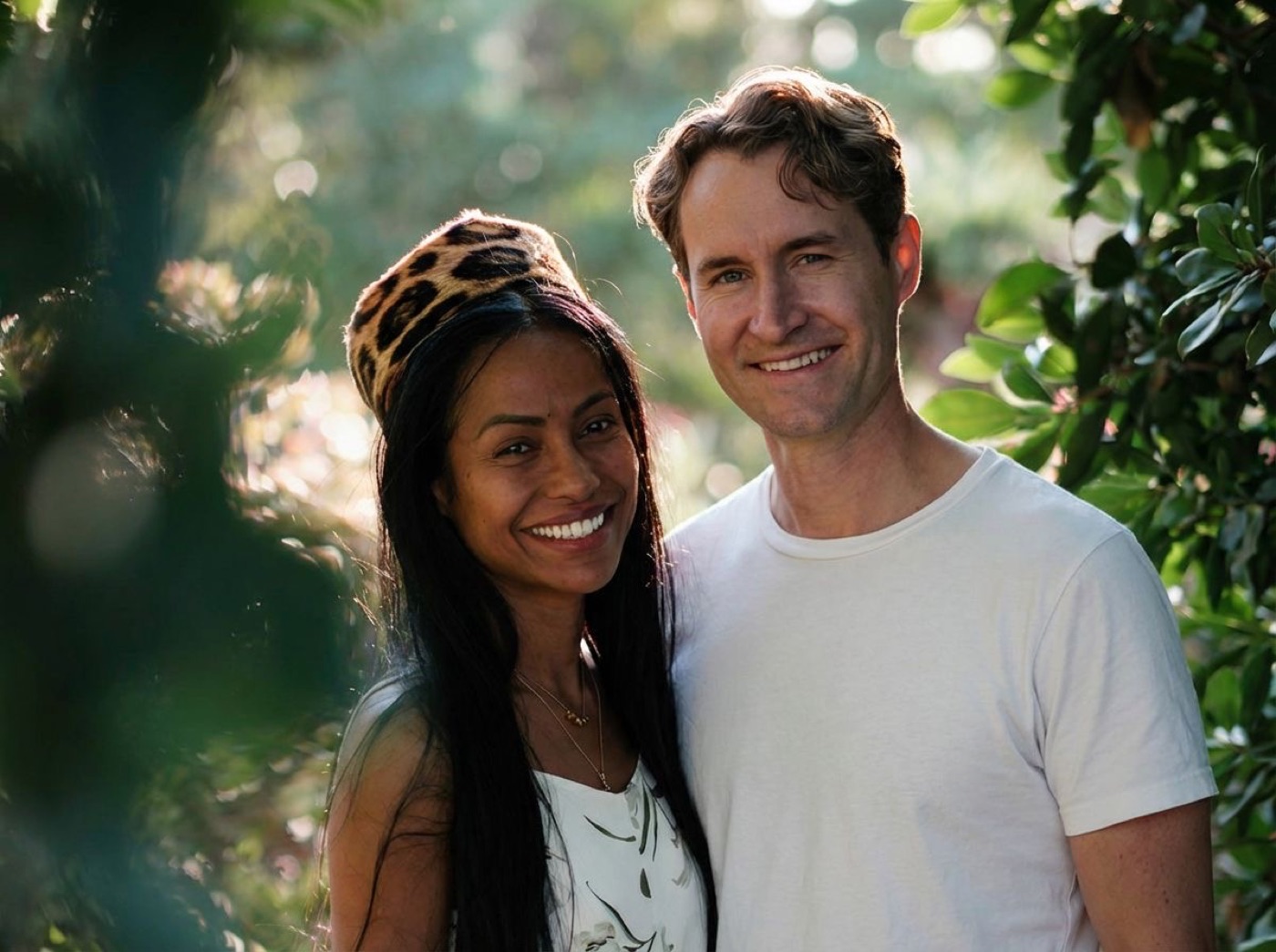
Tatiana and Charles smiling together among green leaves in soft sunlight Integration Support · Iboga Practitioners in Training

Charles & Tatiana

Charles and Tatiana hold integration support before, during, and after the retreat, and are in training in the iboga tradition under the elders. Charles received his own iboga initiation with Popo.

They are the people you speak with during preparation and the ones who stay in contact in the weeks after you go home.

Four roles, one container.

Every retreat is held by a community. There are usually around 15 participants and around 20 people supporting the ceremony, so no single person is carrying more than they can hold.

The Nima

The elder who leads

In Bwiti the Nima is the senior spiritual authority and master of ceremonies: the person responsible for guiding the ritual and for safeguarding the tradition's knowledge.

The Nima sets the dose, reads the room across the night, decides when the ceremony moves and when it waits, and speaks individually with every guest before the first night begins.

Initiated Assistants

Awake the whole night

Assistants who have been through the initiation themselves stay with the group from dusk until the ceremony closes. They handle the practical work of a long night — water, movement, the walk outside, the cloth, the quiet word.

Because they have been where you are, they do not panic, and they do not interpret your night for you.

Musicians

The ones who carry the sound

The ngombi harp, the mougongo mouth-bow, rattles, sticks, and voice. The musicians play live for the length of the ceremony and respond to what is actually happening in the room.

In this tradition the music is not accompaniment to the medicine. It is half of the medicine.

Hosts and Support

Everything outside the temple

The Brazilian team holds the ground: screening and preparation before you travel, transfers, accommodation, the kitchen that runs the fast and then breaks it, and the designated contact who handles the outside world so you do not have to.

They also handle integration contact in the weeks after you leave.
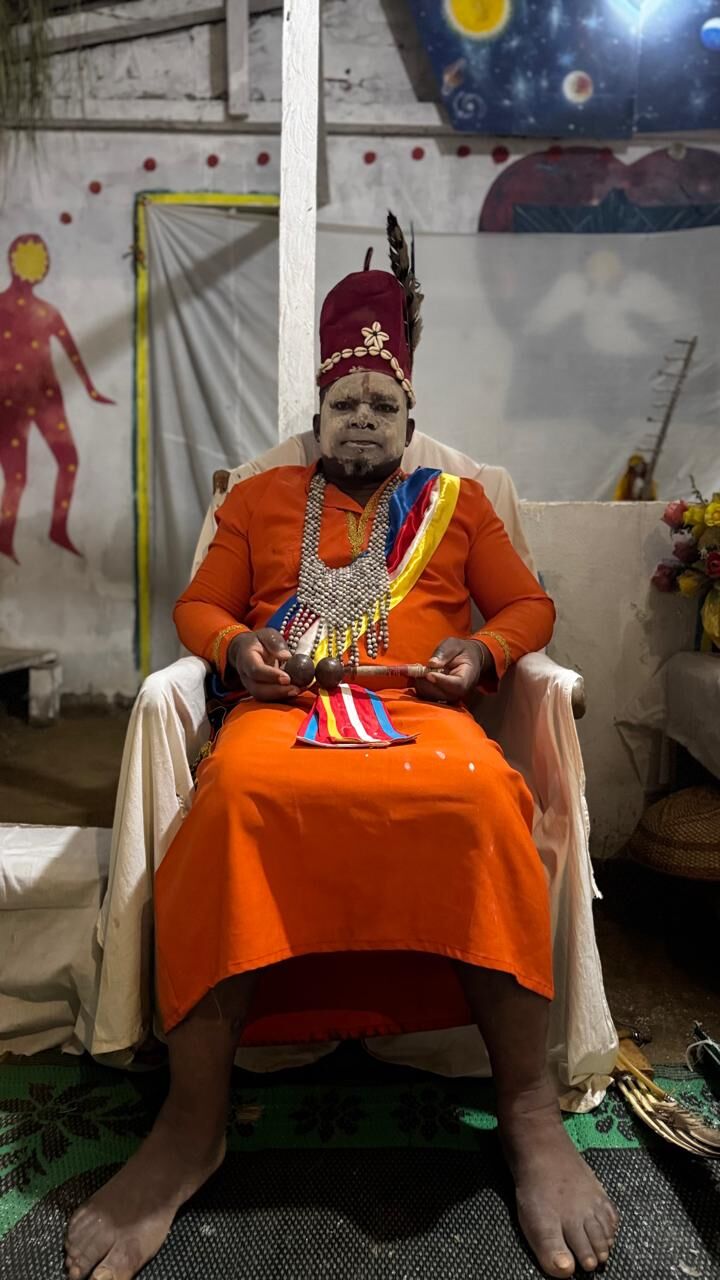
An elder seated in orange ceremonial dress with white face paint, a red headdress and beaded collar
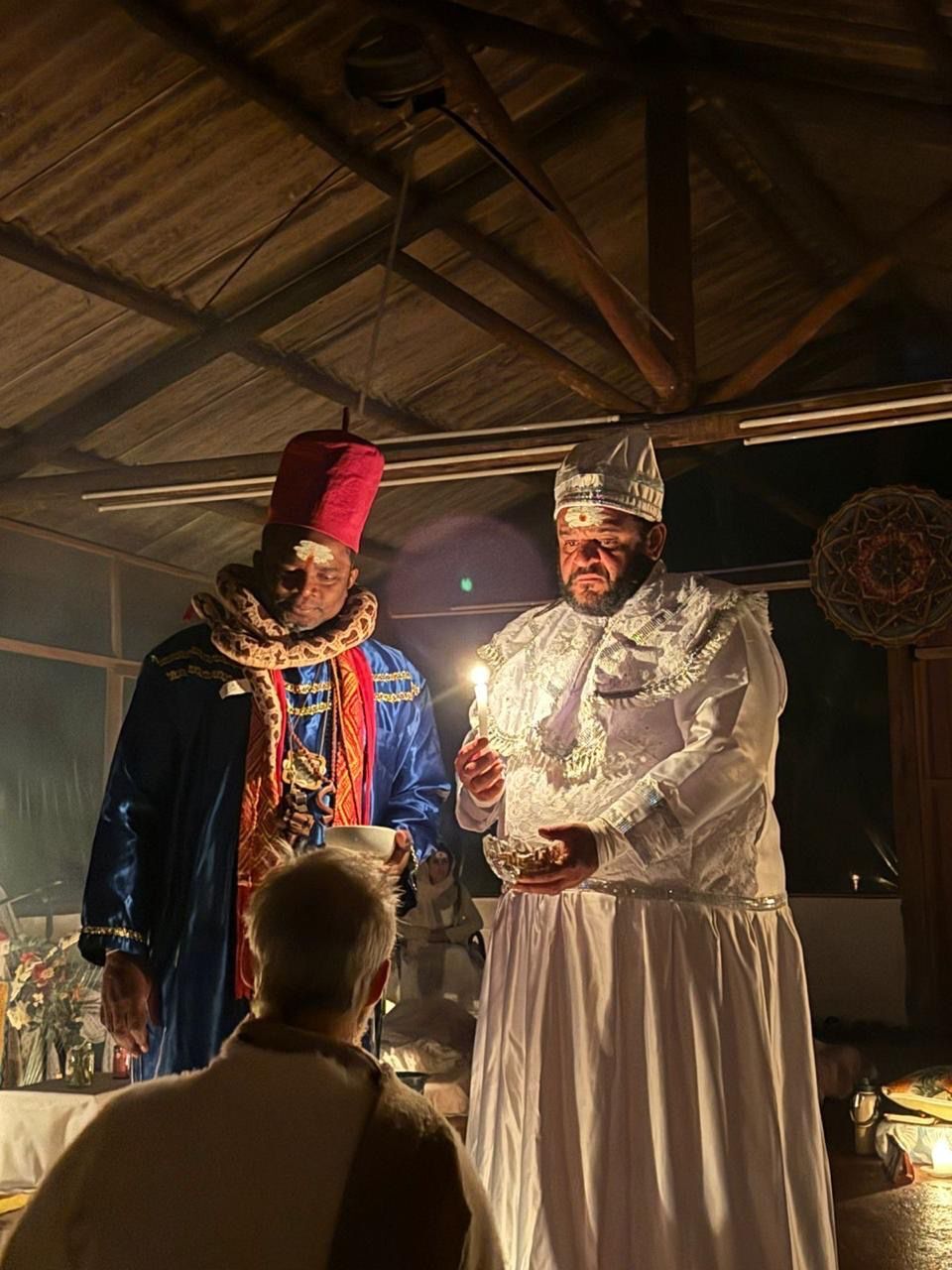
Two elders in ceremonial robes and headdresses, one holding a candle, standing before a participant
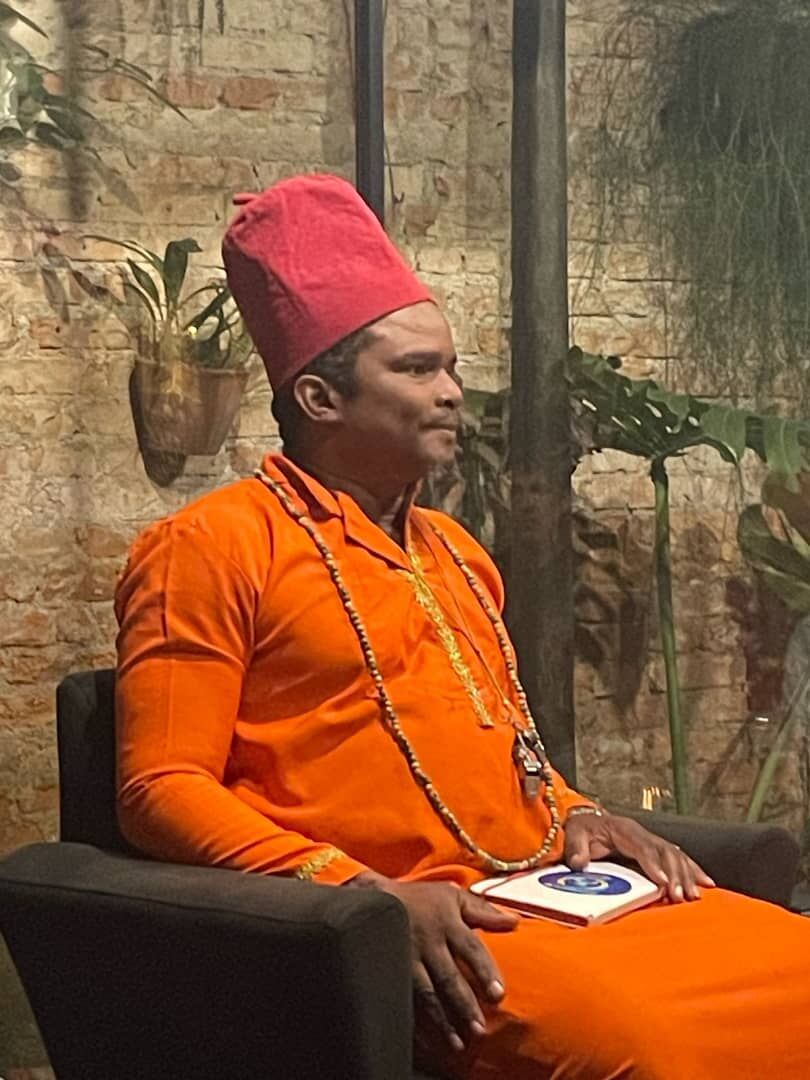
An elder in an orange robe and red cap seated in profile against a brick wall

Elders of the tradition in ceremonial dress.

The tradition is not a resource to extract from.

Running a retreat at this standard costs real money: bringing elders and medicine from Gabon, a setting that can hold a ceremony properly, food that supports a fast and then breaks it well, and a support team larger than the group it holds.

Alongside that, part of what the retreat raises goes back to communities in Gabon, chosen by the elders themselves. This is not charity attached to a business. It is the minimum acknowledgement owed to the people whose knowledge makes any of this possible.

We also work to keep doors open where we can, so that access to the tradition is not decided purely by what someone can pay.

Ask us anything before you decide.

Questions about lineage, language, safety, medication, or how a night actually runs are all welcome and expected. The first conversation exists for exactly that.